
Bangkok: people, places and layers
A photograph often begins with one thing catching my attention. A face, a gesture, a patch of light. But what happens around that first subject can make the picture more interesting.
These photographs from Hua Lamphong railway station and Wat Phra Kaew in Bangkok explore that relationship. People are the starting point, but the surroundings, the space between figures and the choice of where to focus all contribute.
People within the station
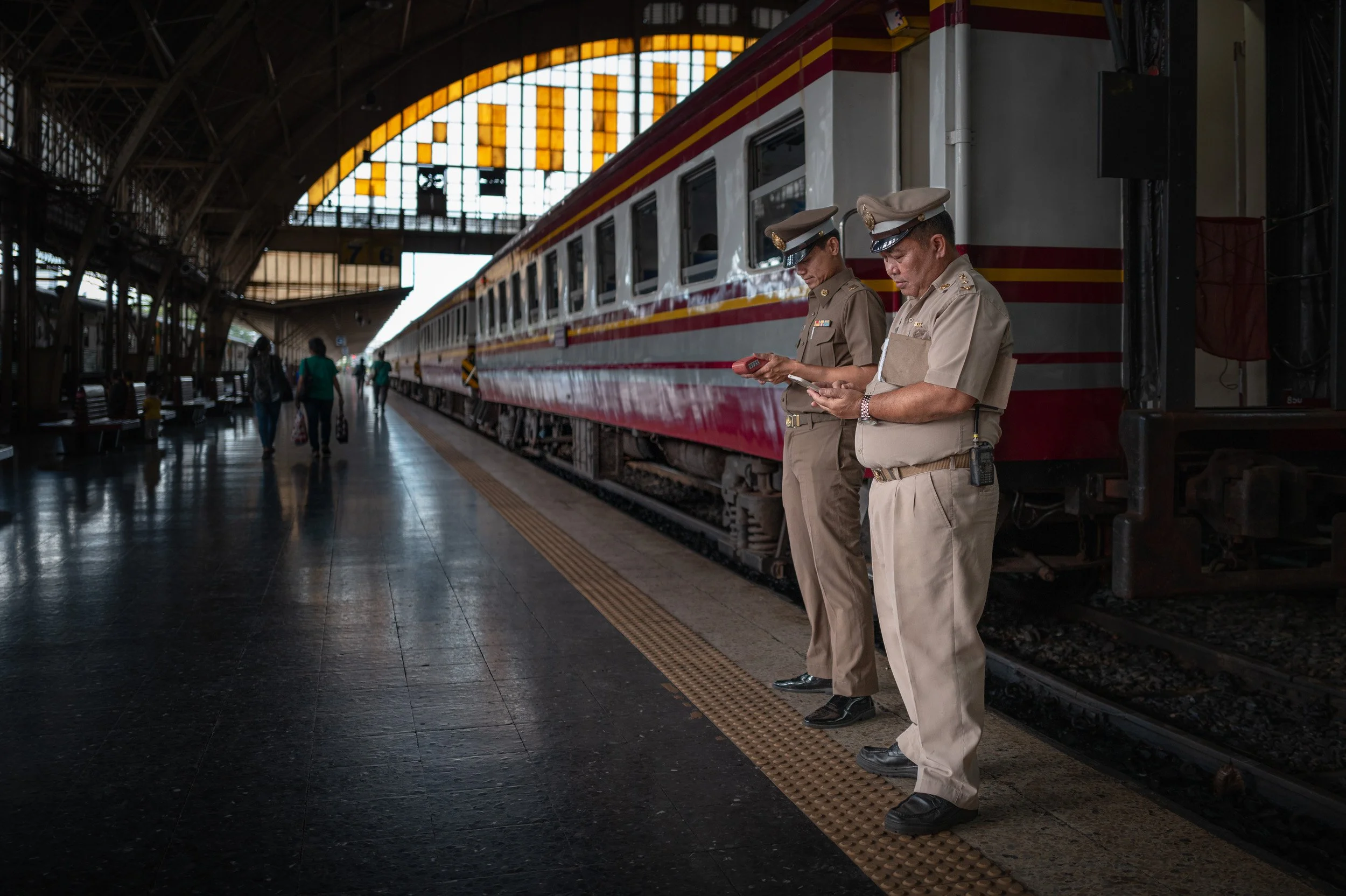
At Hua Lamphong, two uniformed railway staff stood beside a train that would soon be departing. Both were looking down, occupied with what they held in their hands. Their similar postures gave the scene a rhythm.
The station provided the structure around them. The carriage stretched into the distance, the platform drew the eye through the frame, and the light picked out their uniforms against the darker interior.
For me, the photograph works through that combination. The two men hold our attention, while the train and the people further along the platform give their moment a setting.
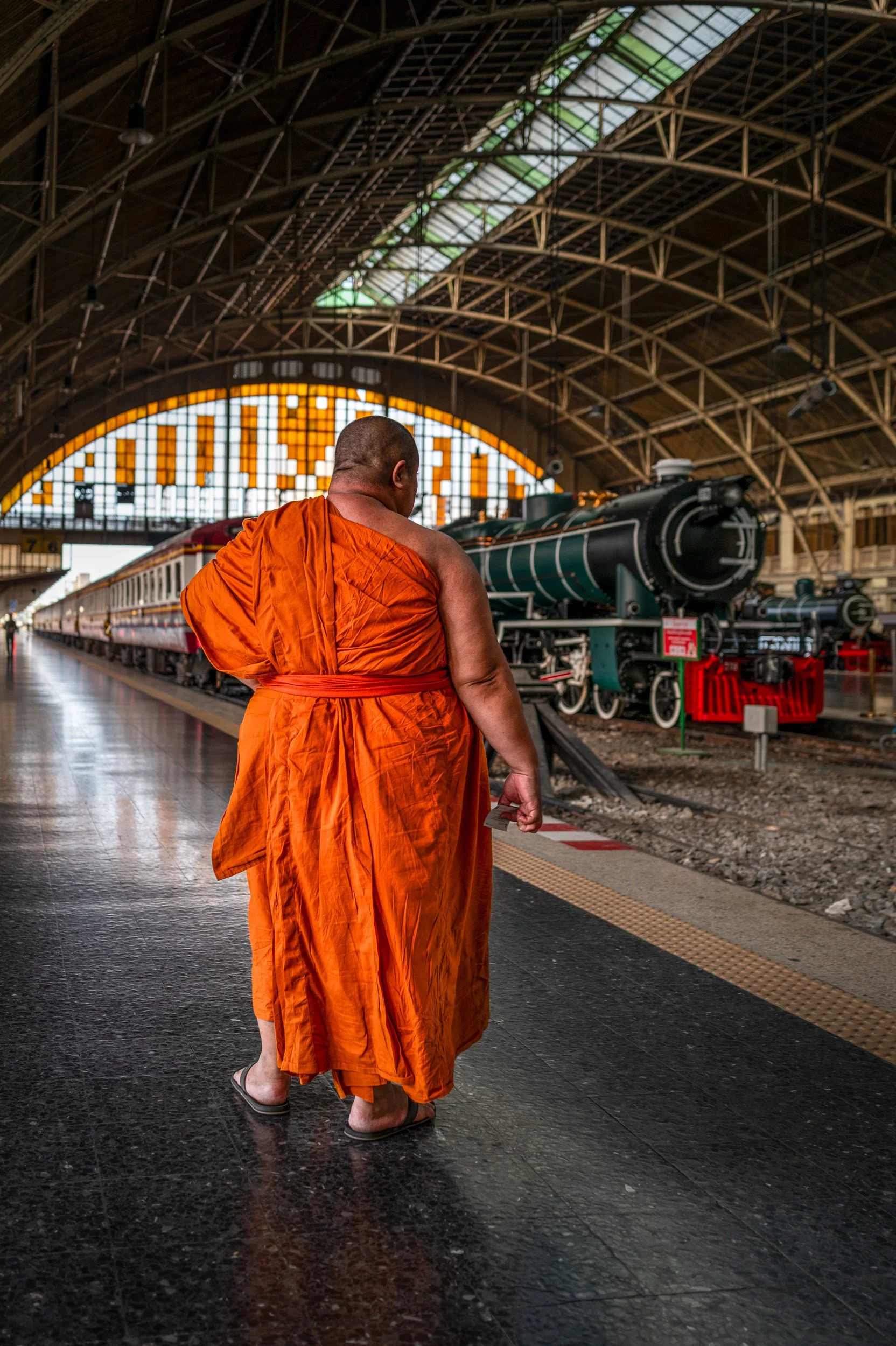
Another photograph places a monk in the foreground, facing towards the locomotives beneath the station’s broad roof. His orange robe gives the eye a clear starting point. Beyond him, there is room to explore the trains, the roof structure and the light through the coloured glass.
Keeping those surroundings in the frame allows the place to contribute to the photograph.
Experimenting with layers at the temple
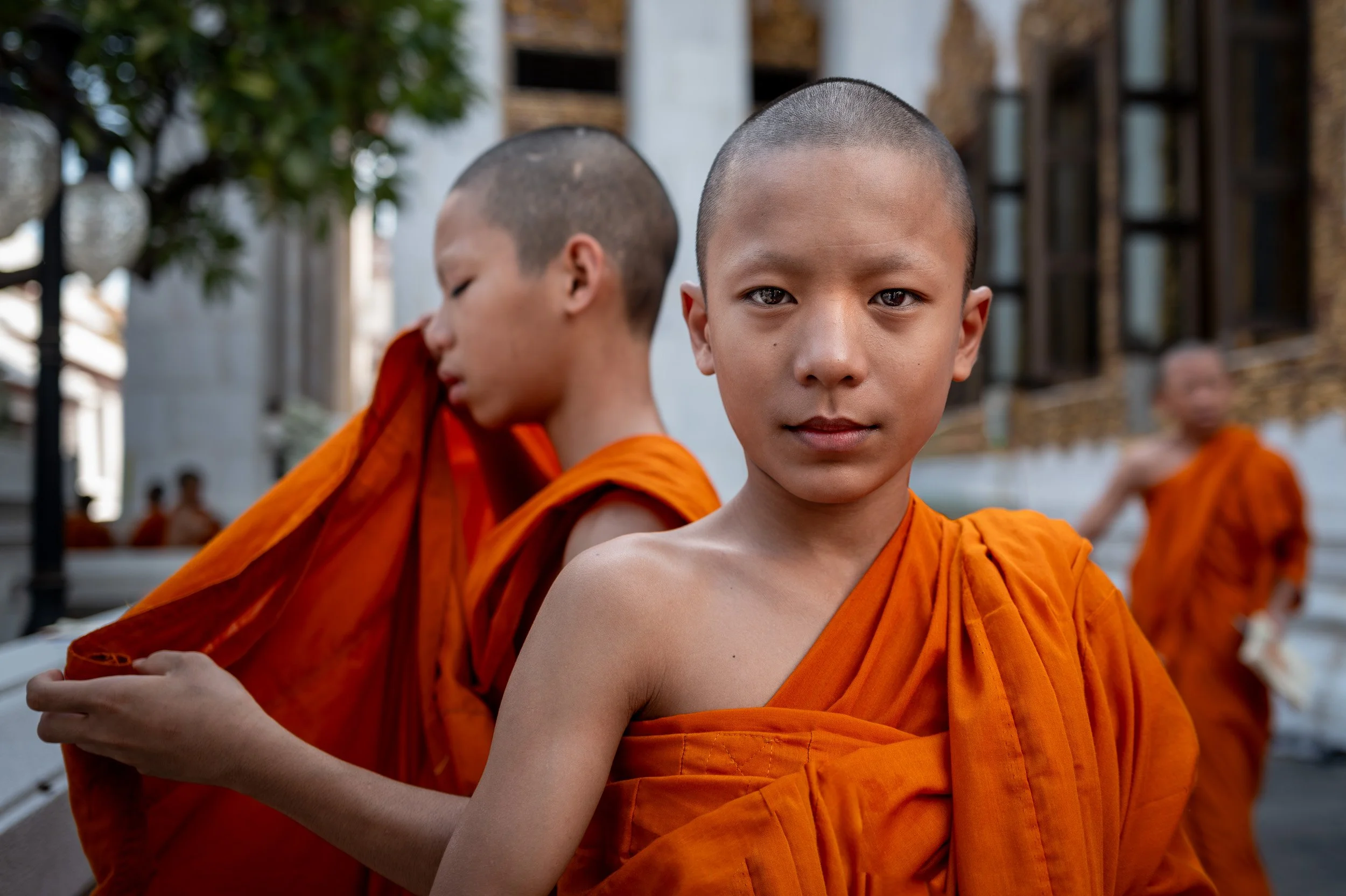
At Wat Phra Kaew, the young monks had just finished a prayer ceremony. They were more relaxed and playful, and I began experimenting with layers of interest.
In the first photograph, the nearest novice looks directly into the camera. His face is sharp and his gaze creates an immediate connection. Behind him, another novice adjusts his robe, with more figures and the temple architecture further back.
I wanted that direct encounter to sit within a wider scene. The background gives us other things to notice once we move beyond the face.
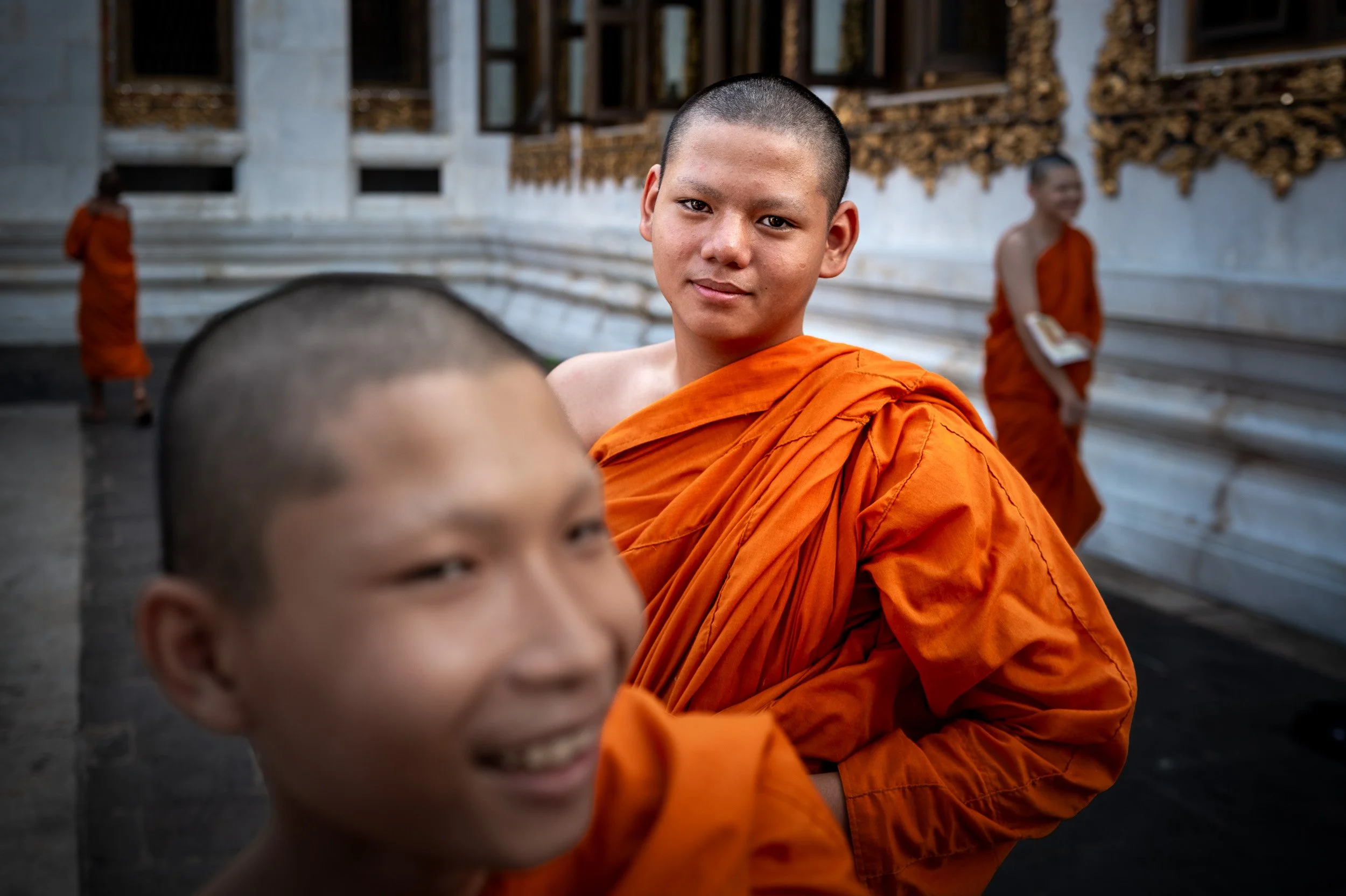
In the second photograph, I shifted the focus further into the frame. A playful novice fills much of the foreground, out of focus, while the sharper face beyond draws our attention.
The blurred figure contributes expression, colour and a sense of closeness. Looking past him becomes part of looking at the photograph.
These were two experiments with the same idea: creating depth by giving the viewer more than one place to look.
A few things to try
Look around your main subject.
Once something catches your eye, check what sits in front of it and behind it. Another person or a small gesture might add to the picture.
Choose where attention should settle.
Focus helps establish a starting point. A softer foreground or background can still contribute to the composition.
Pay attention to overlap.
A small change in position can separate faces, reveal a gesture or make the relationship between two figures clearer.
Try a second interpretation.
The first frame may establish a direct connection. Another can explore a different relationship between foreground and background. Comparing them is part of the learning.
What interests me about these photographs is how differently people occupy the frame. Sometimes the setting carries much of the story. Sometimes a face holds us, and the rest of the scene unfolds around it.
Do you experiment with layers in your own photographs? I’d enjoy hearing what works for you, and which of these two temple pictures holds your attention.