
What caught my eye in this Lima café was the light falling on a man at his table.
There were other people around him, but the light seemed to separate him from the room. It gave an ordinary moment a particular significance. That was what I wanted to photograph.
When I looked at the initial rendering of the raw file, the scene appeared more evenly lit than I remembered seeing it. The man was there. The surroundings were there. But the relationship between them didn’t carry the same feeling.
The edit became a way of bringing that feeling forward.
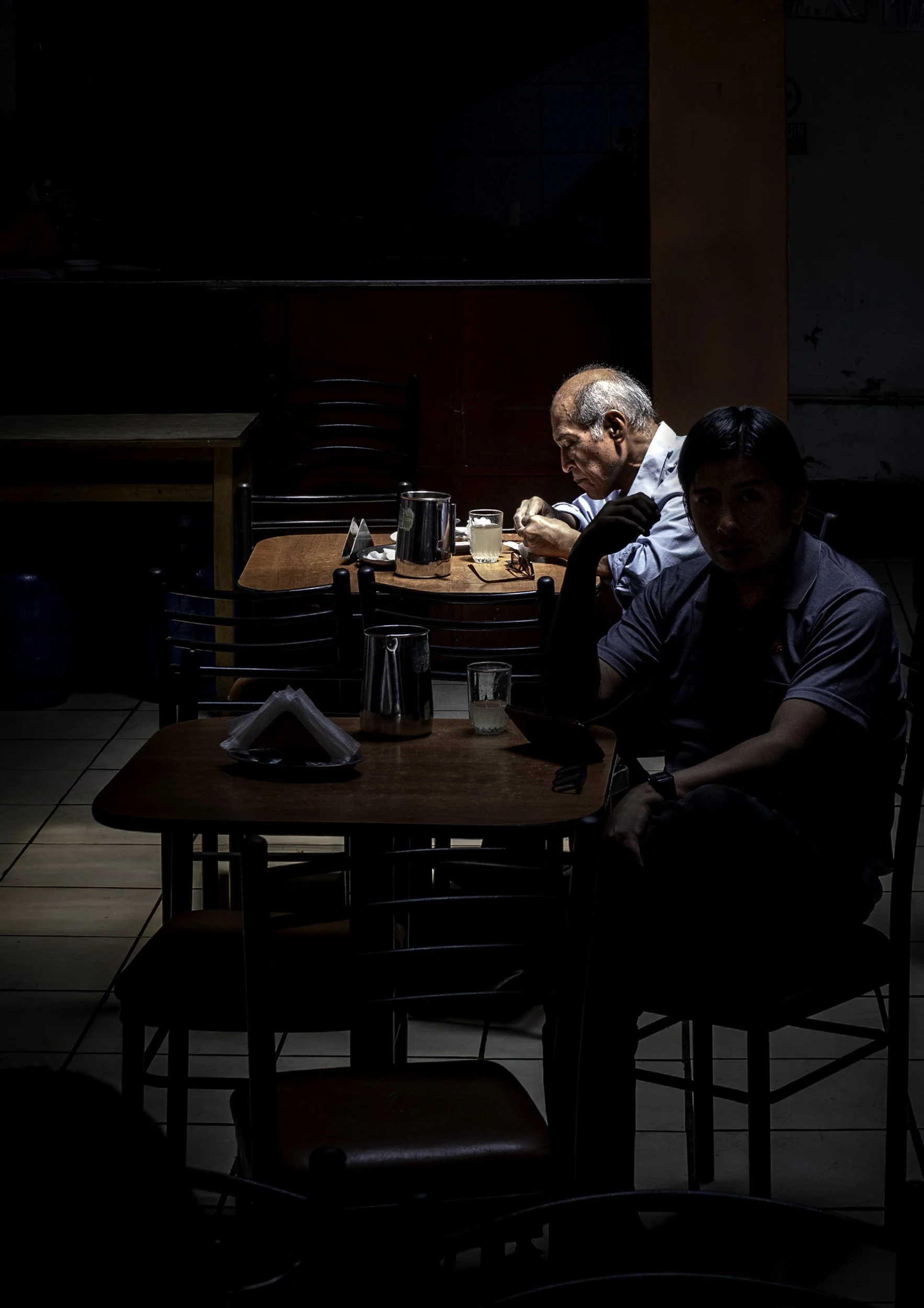
The finished photograph. Cropping, tonal adjustments and removal of the fan concentrate attention on the illuminated diner.
Giving the light a purpose
I wanted to emphasise the separation I had noticed: a solitary diner, isolated within the frame by the light falling on him. I was shooting with a 28mm lens, so I knew I would crop later to concentrate on the area that had caught my eye.
The darker surroundings matter to that reading. The foreground figure remains part of the scene, while the illuminated man draws my attention further into the photograph. The light gives him a presence that might otherwise pass unnoticed.
I also removed the fan behind the diner because I found it distracting. Alongside the crop and the changes to light and shade, that was a deliberate choice about where I wanted the viewer’s attention to settle.
For me, there is a parallel with painting. A painter decides what to include, what to leave out and which details deserve emphasis. In editing this photograph, I was making similar decisions, simplifying the scene to give more weight to the light and the diner within it.
I don’t know what he was thinking or how he felt. The sense of solitude is my response to the scene, expressed through the photograph.
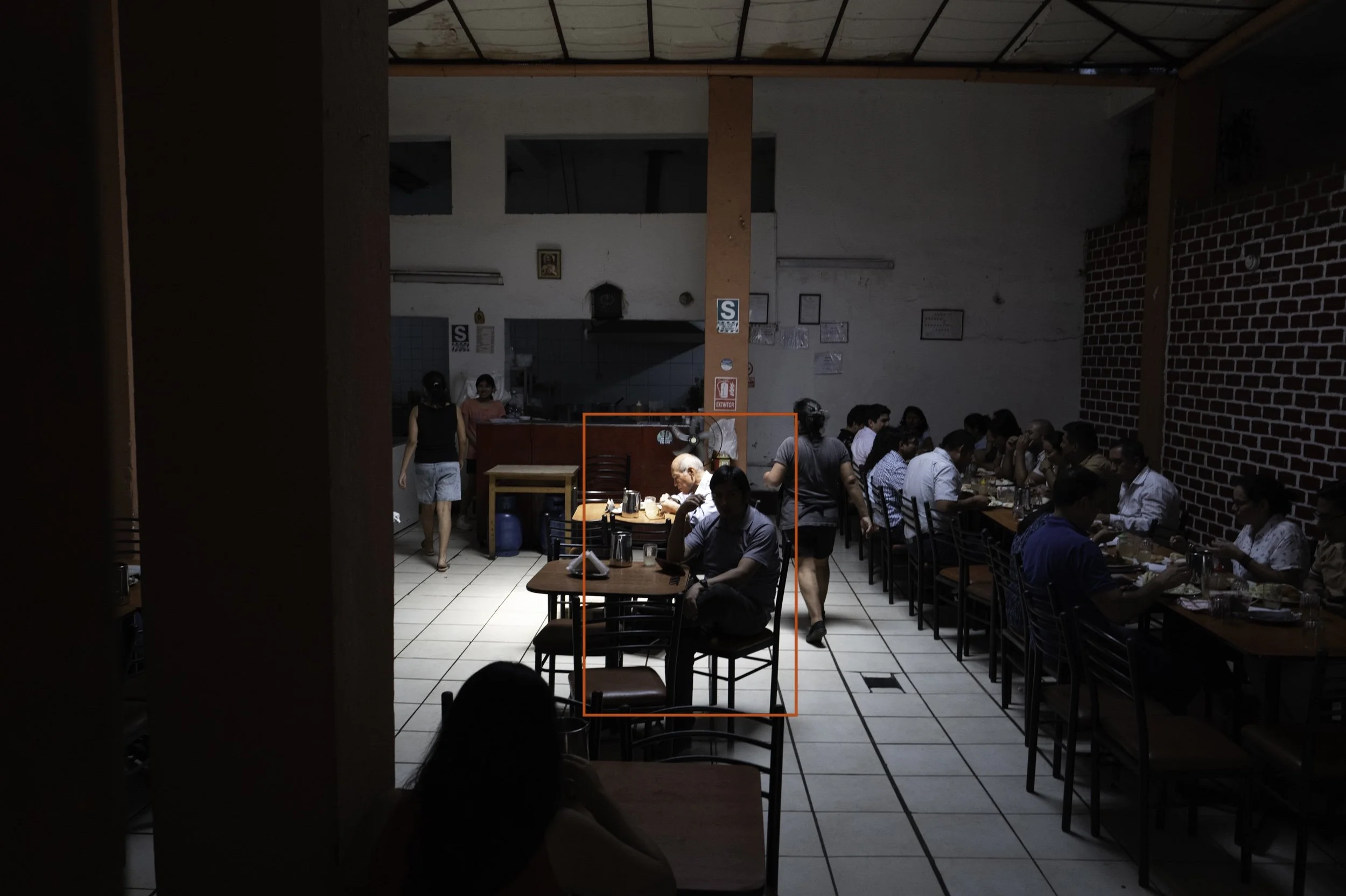
The wider café scene, with the area of interest outlined in red.
Where does the photograph finish?
I understand the satisfaction of making a photograph that feels complete in the camera. Capturing the moment, choosing a position and deciding what belongs in the frame all matter.
For this photograph, editing was another part of those decisions. I was working towards the contrast I remembered seeing and the emotion I wanted the image to convey.
That leaves a question worth considering: how far can an edit go while still feeling faithful to the encounter?
For me, this picture is a useful place to explore that question. The man is surrounded by everyday activity, yet the light briefly makes him the centre of it.
A few things to try
Decide what matters before moving the sliders.
Identify what first drew you to the scene. Let that guide the edit.
Think about the whole frame.
The subject’s surroundings influence how we see them. Notice what happens when those areas become lighter or darker.
Compare the feeling as well as the detail.
Move between your starting version and the edit. Consider what each version communicates.
Know when to stop.
Give your eyes a break, then return. Check whether the edit still serves the photograph.
Do you prefer to finish a photograph in the camera, or does editing help you express what you saw? I’d enjoy hearing where you draw the line.